
Have you ever experienced a sudden power outage in your home and wondered what to do next? If your lights flicker or certain outlets stop working, chances are your circuit breaker has tripped.
Knowing how to reset the circuit breaker quickly and safely can save you time and hassle—and keep your home’s electrical system running smoothly. In this guide, you’ll learn simple, step-by-step instructions to reset your breaker with confidence. Plus, you’ll find out when it’s crucial to call a professional, so you don’t risk your safety.
Keep reading, and take control of your home’s power like a pro!
Locate The Tripped Breaker
Finding the tripped breaker is the first step to restoring power safely. The breaker panel holds all the switches that control electricity in your home. Each switch protects a different circuit.
A tripped breaker looks different from the others. It often sits between the ON and OFF positions. Sometimes, it may appear slightly off or loose compared to the rest.
Knowing how to spot the tripped breaker helps you fix the issue fast. It prevents confusion and keeps you safe during the reset process.
Open The Breaker Panel
Locate the main electrical panel, usually in a utility room or basement. Open its door carefully to see the breakers inside. Good lighting helps you see the breaker labels clearly.
Identify The Tripped Breaker
Look for a breaker that is not fully ON or OFF. It may be halfway between the two. Sometimes it feels loose or different when you touch it.
Check Breaker Labels
Read the labels next to each breaker. They tell which part of the house they control. This helps confirm the tripped breaker matches the area with no power.
Use A Flashlight If Needed
In dim areas, use a flashlight to spot the breaker better. This reduces mistakes and makes the process quicker and safer.
Flip Breaker Off Firmly
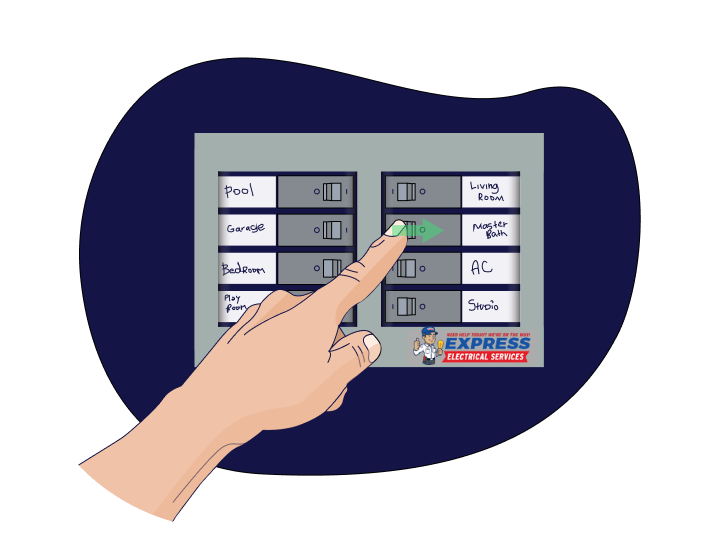
Flipping the breaker off firmly is a key step in resetting it properly. This action resets the internal switch inside the breaker. A light or partial flip may not fully reset it.
Make sure to push the breaker handle all the way to the “OFF” position. You will feel a slight resistance before it clicks off completely. This ensures the breaker is fully disengaged.
Resetting with a firm flip prevents the breaker from immediately tripping again. It clears any electrical faults or overloads sensed by the breaker.
Open the breaker panel and look for the breaker that is not aligned with the others. It usually sits between the “ON” and “OFF” positions.
Identifying the correct breaker helps avoid turning off the wrong circuit in your home.
Flip To Off Firmly
Push the breaker handle firmly to the full “OFF” position. Do not stop halfway or gently move it.
A solid click means the breaker is completely off and ready to reset.
Flip Back To On
After turning it off, push the breaker handle back firmly to the “ON” position. This restores power to the circuit.
If it stays on, the reset was successful. If it trips again, the issue may persist.
Switch Breaker Back On
After confirming the circuit breaker is fully off, the next step is to switch it back on.
This action restores power to the circuit and should be done with care.
Doing it correctly prevents damage and keeps your home safe.
Open your electrical panel door.
Look for the breaker that is not aligned with others.
It usually sits between the “ON” and “OFF” positions.
Flip The Breaker To Off
Push the breaker firmly to the full “OFF” position.
This resets the breaker’s internal switch.
Make sure it clicks into place to confirm it is off.
Switch The Breaker Back On
Push the breaker handle firmly back to the “ON” position.
You should feel a click or slight resistance as it engages.
This action restores power to the circuit instantly.
Check For Immediate Tripping
Observe if the breaker stays on after switching it back.
If it trips again immediately, unplug devices on that circuit.
Wait a few minutes to let the breaker cool down before trying again.
Wait And Retry If Needed
Sometimes the breaker may trip again right after resetting. Wait a few minutes to let it cool, then try switching it on once more. Unplugging devices on that circuit can help prevent immediate trips.
Sometimes a circuit breaker does not reset right away. It may trip again because it is still hot or overloaded. Waiting lets the breaker cool down and reset internally.
Give it a few minutes before trying again. This pause helps the breaker’s thermal sensor to reset. Trying too soon can cause it to trip again immediately.
Unplug Devices To Reduce Load
Remove some devices from the circuit before resetting the breaker. Unplugging lowers the electrical load. This action helps prevent the breaker from tripping again right away.
After unplugging, wait a few minutes for the breaker to cool. Then try switching it back on. If it holds, plug the devices back in one at a time.
If the breaker trips again immediately, even after waiting, there might be a serious issue. It could be a short circuit or faulty wiring. Stop trying to reset it repeatedly.
Contact a licensed electrician. They can find and fix the problem safely. Do not ignore frequent breaker trips as they can cause electrical hazards.
Unplug Devices Before Reset
Unplugging devices before resetting a circuit breaker is an important safety step. It helps prevent damage to your appliances and avoids another immediate trip. Many times, an overloaded circuit causes the breaker to trip. Unplugging devices reduces the load and gives the breaker a chance to reset properly.
Unplugging also protects your devices from power surges that can happen when the breaker resets. Power surges can harm sensitive electronics and shorten their lifespan. Taking time to unplug devices ensures a safer reset process for your home’s electrical system.
Identify Devices On The Tripped Circuit
Find all devices that draw power from the tripped circuit. This includes lamps, kitchen appliances, and chargers. Unplug each device to reduce electrical load. This step helps the breaker reset without tripping again immediately.
Unplug Devices To Reduce Electrical Load
Unplugging devices lowers the current flowing through the circuit. Overloaded circuits cause breakers to trip to protect your home. Removing devices stops excess current and prevents repeated trips. It also keeps your appliances safe during the reset.
Wait Before Resetting The Breaker
After unplugging devices, wait for a few minutes. This pause lets the breaker cool down and reset internally. Attempting to reset too soon may cause it to trip again. The wait time improves the chances of a successful reset.
Plug Devices Back In Gradually
Once the breaker resets, plug devices back in one at a time. This process helps identify any device causing overload. Gradual reconnection prevents sudden power surges. It keeps your electrical system stable and safe.
Troubleshoot Persistent Tripping
Persistent circuit breaker tripping signals an ongoing electrical issue. It prevents power from staying on, which can disrupt your daily life. Before calling an electrician, some simple checks can help identify the problem. Follow these steps to troubleshoot persistent tripping safely and effectively.
Check For Faulty Appliances
Unplug all devices on the tripped circuit. Plug them back one by one while resetting the breaker. Notice if the breaker trips after plugging in a specific appliance. Faulty or damaged appliances often cause breakers to trip. Replace or repair any device that triggers the breaker.
Inspect For Wiring Issues
Look closely at the wiring connected to the breaker and outlets. Loose or damaged wires cause short circuits and breaker trips. Turn off power before inspecting wires. Tighten any loose connections and replace damaged wires. Call a professional if you find complex wiring problems.
Look For Signs Of Damage
Check your breaker panel for burn marks or unusual smells. Damage in the panel or breaker indicates a serious problem. Also, inspect outlets and switches on the circuit for discoloration or melting. Such signs mean overheating or electrical faults. Replace damaged parts immediately to avoid hazards.

When To Call An Electrician
Knowing when to call an electrician is important for your safety and home. Simple resets are easy, but some problems need expert help. Ignoring warning signs can cause bigger issues or danger.
Repeated Trips Of The Circuit Breaker
If the breaker trips again right after resetting, a serious electrical issue may exist. This can mean overloaded circuits or faulty wiring. An electrician can find and fix these problems safely.
Burning Smell Or Sparks Near The Panel
Smelling burning or seeing sparks near the breaker panel is dangerous. It shows possible electrical faults or overheating. Stop using the panel and call an electrician immediately.
Breaker Won’t Reset At All
When the breaker won’t stay on, it may be broken or damaged. Forcing it can make things worse. A professional can inspect and replace the breaker if needed.
Old Or Damaged Electrical Panels
Old panels can fail or cause power issues. If your panel looks rusty or worn out, an electrician can check it. Upgrading old panels improves safety and performance.
After Major Electrical Work
After changes or repairs to your home’s wiring, test the breakers carefully. If problems appear, an electrician should inspect the work. They ensure everything is safe and correct.
Safety Tips During Reset
Resetting a circuit breaker requires care to avoid injury or damage. Safety should be the top priority during the reset process. Following simple safety tips helps protect you and your home.
Before touching the breaker, make sure your hands are dry. Water and electricity do not mix and can cause shocks. Use a flashlight if the area is dark to see the breaker clearly.
Turn Off All Appliances On The Circuit
Switch off or unplug devices connected to the tripped circuit. This prevents a sudden power surge when the breaker is reset. It also helps identify if an appliance caused the overload.
Wear Rubber-soled Shoes
Rubber-soled shoes provide extra insulation from the ground. They reduce the risk of electrical shock while working near the breaker panel. Avoid standing on wet floors or damp surfaces.
Use One Hand When Resetting
Keep one hand away from the panel when flipping the breaker. This reduces the chance of current passing through your chest if a shock occurs. Hold the breaker switch firmly with your dominant hand.
Check For Signs Of Damage
Look for melted wires, burn marks, or a burning smell near the breaker box. These indicate serious electrical problems. Do not reset the breaker if you see damage. Call a professional electrician immediately.
Keep Children And Pets Away
Ensure kids and pets are not near the breaker panel during the reset. They can accidentally touch live parts or cause distractions. Safety first for everyone in the home.
Common Questions On Resetting
Many people have questions about resetting a circuit breaker. Understanding these can help you reset safely and correctly. Here are answers to two common concerns.
Is Main Breaker Shutdown Needed?
You usually do not need to turn off the main breaker. Resetting the individual tripped breaker is enough. Only turn off the main breaker if you need to work on the whole electrical panel. This step cuts power to the entire home for safety.
For small power issues, reset the breaker that tripped. The main breaker handles all circuits together. Avoid turning it off unless necessary.
How Long To Wait Between Resets?
Wait at least a few seconds before resetting the breaker. This pause lets the internal switch reset properly. If it trips again right away, wait longer—about five minutes. This wait allows the breaker to cool down and clear any overload.
If the breaker continues to trip after multiple resets, unplug devices on that circuit. Wait a few minutes, then try resetting again. Persistent trips may mean a serious electrical issue. Call a professional electrician if the problem continues.
Frequently Asked Questions
How Long To Leave The Circuit Breaker Off To Reset?
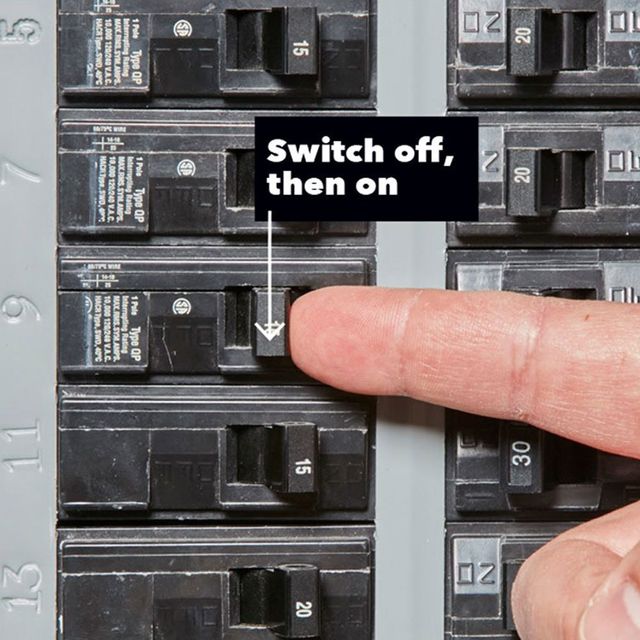
Leave the circuit breaker off for about 5 to 10 seconds to reset it properly. Flip it firmly off, then on.
How To Fix A Tripped Switch?
Locate the tripped switch in your panel. Flip it fully to “OFF,” then firmly switch it back to “ON. ” Unplug devices if it trips again. Wait a few minutes before retrying. Call an electrician if it keeps tripping immediately.
Is It Safe To Reset A Tripped Circuit Breaker?
Resetting a tripped circuit breaker is safe if done correctly. First, switch it fully off, then on. Avoid resetting repeatedly; call an electrician if it trips again quickly.
How To Tell If A Breaker Needs To Be Reset?
A breaker needs resetting if its switch is between ON and OFF or in the OFF position. Flip it fully OFF, then ON. If it trips again quickly, unplug devices and wait before retrying.
What Is The First Step To Reset A Tripped Circuit Breaker?
Locate the breaker in the panel that is in the tripped position, usually between ON and OFF.
Conclusion
Resetting a circuit breaker is a simple way to restore power safely. Always switch it fully off before turning it on again. If it trips repeatedly, unplug devices and wait a few minutes. Persistent problems may need a professional electrician’s help.
Following these steps keeps your home safe and powered up. Stay calm, and handle breakers carefully to avoid hazards.