
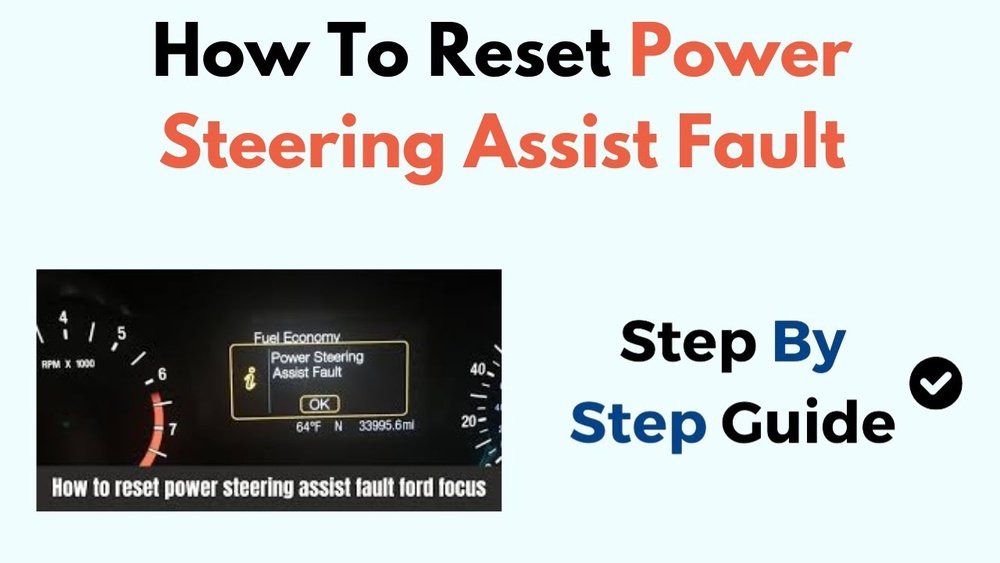
Is your car’s power steering acting up, showing a “Power Steering Assist Fault” warning on the dashboard? This can be frustrating and even unsafe if you don’t address it quickly.
But before you rush to the mechanic, there are simple steps you can take to reset the power steering assist fault yourself. Whether it’s a loose connection, a low battery, or a sensor glitch, you can often fix the problem with easy tricks like a lock-to-lock steering calibration, a battery reset, or using a scan tool to clear error codes.
You’ll learn exactly how to reset your power steering assist fault step-by-step, saving time and money while getting your steering back to smooth and responsive. Keep reading to find out how to regain full control of your car’s steering safely and confidently.

Credit: www.reddit.com
Power Steering Assist Fault Causes
Power steering assist faults happen when the system detects a problem. These issues stop the power steering from working well. Knowing the main causes helps you fix the fault faster. Common reasons include battery problems, faulty parts, wiring issues, or sensor failures. Each cause affects the steering differently and needs a specific check.
Understanding these causes can save time and avoid costly repairs. It also helps keep your steering safe and smooth. Below are some frequent power steering assist fault causes.
Battery Voltage Issues
Low battery voltage can trigger power steering faults. The power steering system needs steady voltage to work correctly. A weak or dying battery may cause the system to lose power. This leads to warning lights on the dashboard. Checking the battery health is a simple first step.
Faulty Eps Module Or Motor
The Electric Power Steering (EPS) module controls assist functions. A faulty module or motor can stop the power assist. This results in a heavy steering wheel and warning signals. Problems inside the module often need professional repair or replacement.
Wiring And Fuse Problems
Damaged wiring or blown fuses can disrupt power steering signals. Loose connections or broken wires cause faults in the system. Fuses protect the circuit but can fail from surges or age. Regular inspection of wiring and fuses prevents these issues.
Torque Sensor Failures
The torque sensor detects steering effort and sends data to the EPS. A bad sensor gives wrong information or no signal at all. This causes the power steering to stop assisting or act strangely. Sensor failure usually requires replacement for proper function.
Credit: www.youtube.com
Basic Reset Methods
Basic reset methods help clear simple power steering assist faults quickly. These methods involve easy steps you can do without special tools. They often fix the issue by recalibrating the steering system or resetting the car’s electronics. Try these first before seeking professional help.
Lock-to-lock Steering Calibration
Start the engine on a flat surface with wheels straight. Turn the steering wheel fully to the left. Then, turn it fully to the right. Finally, return the wheel to the center position. This movement helps the system relearn the steering angle. It can clear minor faults in power steering assist.
Battery Disconnect And Reconnect
Open the hood and locate the negative battery terminal. Disconnect the negative terminal carefully to cut power. Wait for about 10 minutes to let the system reset. Reconnect the terminal tightly and close the hood. Start the car and check if the power steering assist fault is gone.
Ignition Off And Restart Procedure
With the wheels straight, turn off the ignition completely. Wait a few seconds to allow the system to reset. Turn the ignition back on and start the engine. This simple step can refresh the power steering system. It often clears temporary faults without further action.
Using A Scan Tool For Reset
Using a scan tool to reset a power steering assist fault is a precise way to fix the issue. This method allows you to access the vehicle’s electronic systems directly. It helps clear error codes and recalibrate sensors that affect steering. The process requires a compatible OBD2 scan tool with EPS module capabilities.
Accessing The Eps Module
Start by connecting the scan tool to the car’s OBD2 port. Turn the ignition on but do not start the engine. Navigate the scan tool menu to find the Electronic Power Steering (EPS) module. Select the EPS module to access its functions. This step is crucial to communicate with the power steering system.
Clearing Fault Codes
Once inside the EPS module, look for the option to read or clear fault codes. Fault codes show what caused the steering assist fault. Use the scan tool to clear these codes from the system memory. Clearing codes often resets the warning light on the dashboard. This step can restore normal power steering function if no serious damage exists.
Steering Angle Sensor Calibration
The steering angle sensor helps the system know the wheel position. Calibration resets the sensor to zero or center position. Find the calibration option in the EPS menu on the scan tool. Follow the instructions to turn the steering wheel fully left, then fully right, and back to center. This process ensures accurate sensor readings and smooth steering response.
Signs To Seek Professional Help
Knowing when to seek professional help for a power steering assist fault is crucial. Some signs indicate that simple resets won’t fix the problem. Ignoring these signs can lead to further damage and unsafe driving conditions.
Recurring Warning Lights
The power steering warning light may turn on briefly and then go off. This can happen with minor glitches. But if the warning light keeps coming back, it signals a deeper issue. A professional mechanic can diagnose the root cause accurately.
Steering Feels Stiff Or Erratic
Power steering should make steering easy and smooth. Stiff or jerky steering means the assist is not working well. This problem can make driving dangerous, especially at low speeds. It often points to a failing steering motor or internal damage.
Sensor Or Wiring Issues
Electric power steering depends on sensors and wiring to work correctly. Faulty sensors or damaged wires can cause the assist fault. These issues require special tools and knowledge to fix safely. A professional repair shop is the best place to handle these problems.
Preventive Maintenance Tips
Preventive maintenance helps avoid power steering assist faults. Small checks keep the system running smoothly. Regular care reduces the risk of sudden failures and costly repairs.
Regular Battery Health Checks
Battery power affects the electric power steering system. Weak batteries cause assist faults or warning lights. Test battery voltage and charge regularly. Replace old or weak batteries quickly to maintain steady power supply.
Inspecting Wiring And Connections
Wiring issues often cause power steering faults. Check wires for damage, wear, or corrosion. Ensure all connectors fit tightly and are clean. Fix loose or broken wires to prevent signal loss and steering problems.
Timely Sensor And Module Testing
Sensors and control modules manage steering assist functions. Faulty sensors send wrong data to the system. Test sensors and modules with diagnostic tools often. Replace any faulty parts to keep the steering system accurate and responsive.

Credit: www.brewsterford.com
Frequently Asked Questions
How Do I Reset My Electric Power Steering Assist?
To reset electric power steering assist, turn the wheel full left, then full right, and center it. Start the engine with wheels straight. Alternatively, disconnect the negative battery terminal for a few minutes, then reconnect and restart the car. Use an OBD2 scan tool to clear EPS codes if needed.
Why Does My Car Say Power Steering Assist Fault?
A “Power Steering Assist Fault” indicates a problem in the Electric Power Steering system. Common causes include low battery voltage, faulty fuse, loose wiring, or a failing torque sensor. Check battery health and connections first. Persistent issues need professional diagnostics for sensors or the EPS module.
How To Reset Power Steering Assist Fault F150?
Start the engine with wheels straight. Turn steering full left, then full right, and center it. Turn off ignition, wait, restart. If unresolved, disconnect the negative battery terminal briefly. Use an OBD2 scanner to clear EPS codes or calibrate the steering sensor.
Seek professional help if the fault persists.
How To Manually Reset A Steering Sensor?
To manually reset a steering sensor, start the engine with wheels straight. Turn the wheel full left, then full right, and center it. Turn off ignition, wait seconds, then restart the engine. Alternatively, disconnect the negative battery terminal for a few minutes, reconnect, and start the car.
What Causes A Power Steering Assist Fault Warning?
A faulty sensor, low battery, or wiring issue often triggers this warning.
Conclusion
Resetting a power steering assist fault can be simple with the right steps. Start with basic resets like turning the wheel lock-to-lock or disconnecting the battery. Using an OBD2 scan tool helps clear fault codes and calibrate the system. Watch for warning lights or unusual steering feel after resets.
Persistent issues may need professional help for sensor or motor problems. Following these tips can keep your steering smooth and safe on the road. Stay calm, take it step by step, and your power steering should work properly again.