
To reset a Hyundai TPMS, inflate all four tires to the exact door-jamb pressure and drive above 15.5 mph for up to 20 minutes. This simple process suits any Hyundai owner dealing with a low-pressure light after adding air.
Tools Needed to Reset Your Hyundai Tpms
- A reliable digital or analog tire pressure gauge (pencil gauges often misread by 2 to 3 psi).
- A 12-volt portable tire inflator or a gas station air pump with a working pressure display.
- The factory tire placard, permanently located on the driver-side door jamb.
- Your vehicle key or keyless start fob to cycle the ignition.
A reliable digital gauge works well as a replacement for standard shop air gauges, but an uncalibrated gas station gauge won’t give you accurate numbers. When a sensor battery dies completely, replacing it requires specialized tire-mounting machinery and an OBD-II relearn tool; let a certified tire shop handle that internal hardware swap.
Step-by-Step
- Park the vehicle on level ground and let the rubber cool for at least three hours, since driving heats the air inside and raises the pressure reading.
- Read the cold tire inflation pressure listed on the driver-side door pillar sticker, which typically calls for 33 to 35 psi depending on the car.
- Remove the valve stem caps and press your gauge firmly onto each stem to measure all four wheels.
- Inflate each underfilled tire with your air compressor until it matches the exact cold psi listed on your door placard.
- Turn the ignition key to the ON position without starting the engine, or press the Start button twice with your foot off the brake.
- Start the engine and drive your vehicle continuously between 15.5 mph and 50 mph for about 10 to 20 minutes until the system recalibrates.
Tip: If your car doesn’t have a physical reset button on the dash, skip step 7 entirely; your vehicle uses an automatic sensor system that re-registers while you drive.
Careful: Don’t set pressures using the maximum psi stamped on the tire sidewall; filling to that limit will cause harsh handling and uneven tread wear.
Careful: If the light flashes for 60 seconds every time you start the car before staying solid, the system has an electronic fault; a tire technician must scan the wheel sensors to find the dead unit.
Driving Conditions and Reset Times

The time and equipment needed to clear your dashboard warning depend on how your vehicle registers pressure changes.
| Vehicle setup | Time or expense | Process difference | Watch during drive |
|---|---|---|---|
| Models with physical TPMS button | 3 seconds hold time; free | Needs manual dash input before driving | Dash light blinks three times to confirm |
| Automatic relearn systems | 10 to 20 minutes driving; free | No button; reads automatically above 15.5 mph | Cluster display until individual numbers populate |
| After seasonal tire rotation | 15 to 25 minutes driving; free | Sensors swap positions on the receiver map | Corner values match real tire positions |
| Severe cold weather drop | 5 minutes to pump; air cost | Air contracts physically; sensors are fine | Pressure stays stable as tires warm up |
It’s safer to add two extra pounds of air and bleed them down with your gauge than to run your tires underinflated.
How to Tell You Did It Right
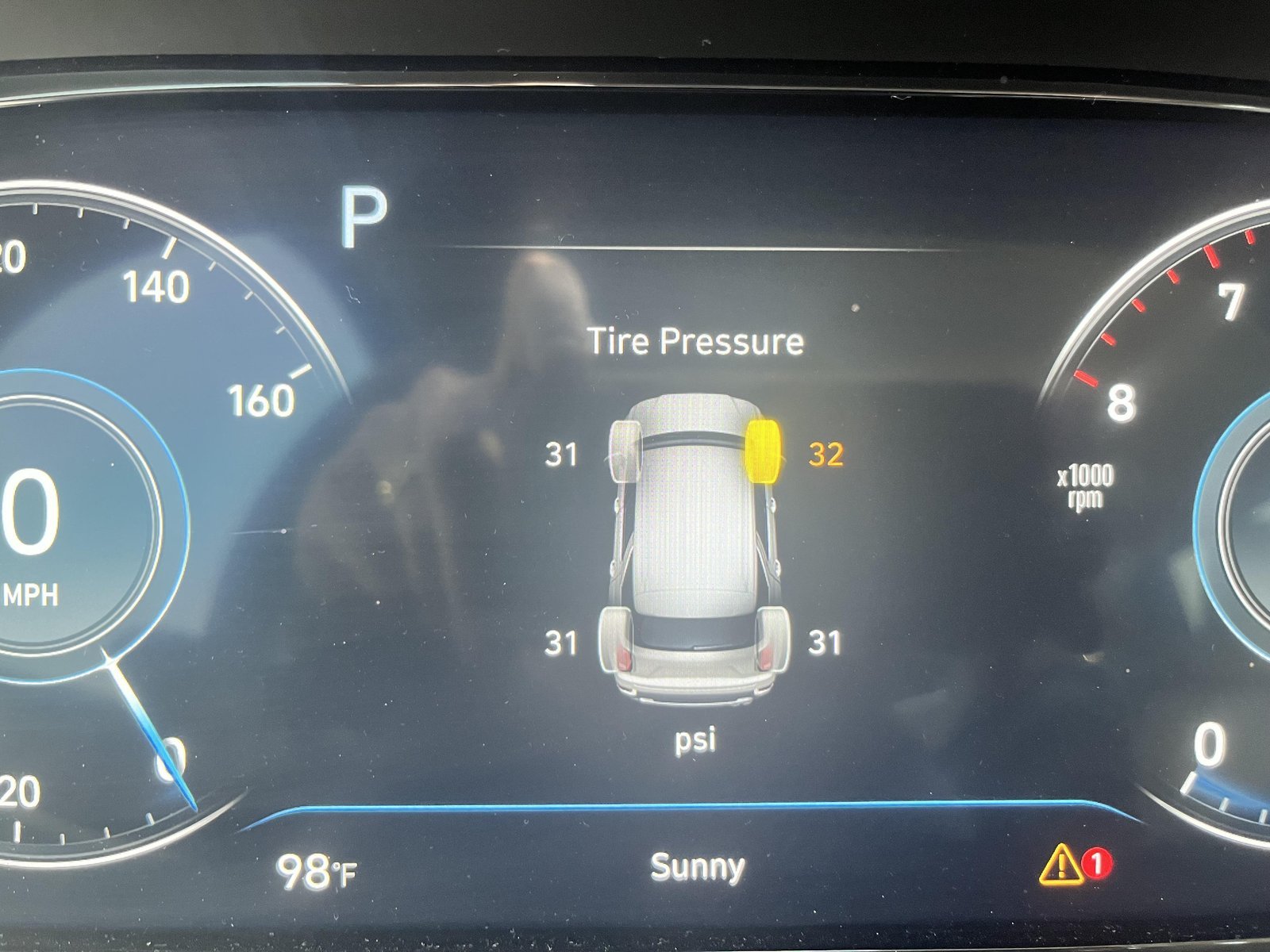
A successful reset leaves your dashboard completely dark with no amber tire symbol, or shows healthy, equal numbers on your instrument screen. A poor outcome leaves the amber horseshoe icon glowing steadily or flashing for a full minute at startup.
This reset failure usually happens because one tire is still two or three psi below the activation threshold, or you didn’t drive fast enough to wake the wheel sensors. To prevent this issue, verify every tire with a standalone gauge, drive on an open road without stop-and-go delays, and always inspect the spare tire if it carries an active sensor.
Pressure Standards and Post-Reset Care
Federal safety regulations enforce strict tire monitoring under NHTSA FMVSS No. 138, which requires cars to warn drivers before a tire drops 25 percent below the manufacturer’s recommended cold placard pressure. After clearing your light, thread all plastic valve caps back on tightly to prevent dirt and road salt from jamming the valve cores. Store your pressure gauge inside the glove box so it stays clean and dry. This calibration lasts until seasonal temperature changes or normal air loss drops your pressure again. If you swap on aftermarket winter wheels lacking original sensors, an authorized service center must program the new hardware.
Dashboard Reset Variations

Using the Digital Instrument Cluster
Driving an Automatic Relearn System
Vehicles without a button or digital menu reset on their own. Drive down a clear road above 16 mph for 12 miles without idling at long red lights. The internal radio receivers will detect the wheel transmitters and switch off the alert automatically.
Clearing with a Handheld Obd2 Tool
Plug a diagnostic scan tool into the port underneath the steering column. Select your model year, run a TPMS diagnostics sweep, clear the stored trouble codes, and let the tool transmit a new baseline directly to the car’s computer.
Frequently Asked Questions
Can Cold Weather Make My Hyundai Tpms Light Turn On?
Yes, cold morning air makes the air inside your tire contract, which drops the pressure by roughly 1 psi for every 10-degree drop in outside temperature. The light turns on when this cold contraction pushes the pressure below the system’s low-pressure warning threshold.
How Long Does a Hyundai Tpms Reset Take While Driving?
It takes between 10 and 20 minutes of continuous driving above 16 mph. If you sit at stoplights or idle in heavy traffic, the internal wheel sensors go to sleep to save battery power, which extends the time needed to finish the calibration cycle.
Is It Safe to Drive with the Tpms Warning Light On?
No, you should pull over safely to inspect your tires for visible punctures, tears, or extreme sagging. If all four tires show plenty of air and roll normally, you can drive slowly to the nearest air pump, but never drive at highway speeds on an underinflated tire.
Why Is My Tpms Light Blinking Instead of Staying Solid?
A blinking light indicates an electronic malfunction in the system rather than low air pressure. The icon flashes for 60 to 90 seconds after starting the vehicle, then stays lit solid, which usually means an internal sensor battery has died or a module can’t read the signal.
What Happens If I Ignore the Low Pressure Alert?
Ignoring the alert causes your tires to run hot, which dramatically increases tread wear, reduces fuel economy, and weakens the internal steel belts. In severe cases, driving on very low pressure causes internal sidewall heat damage that leads to sudden highway tire failure.