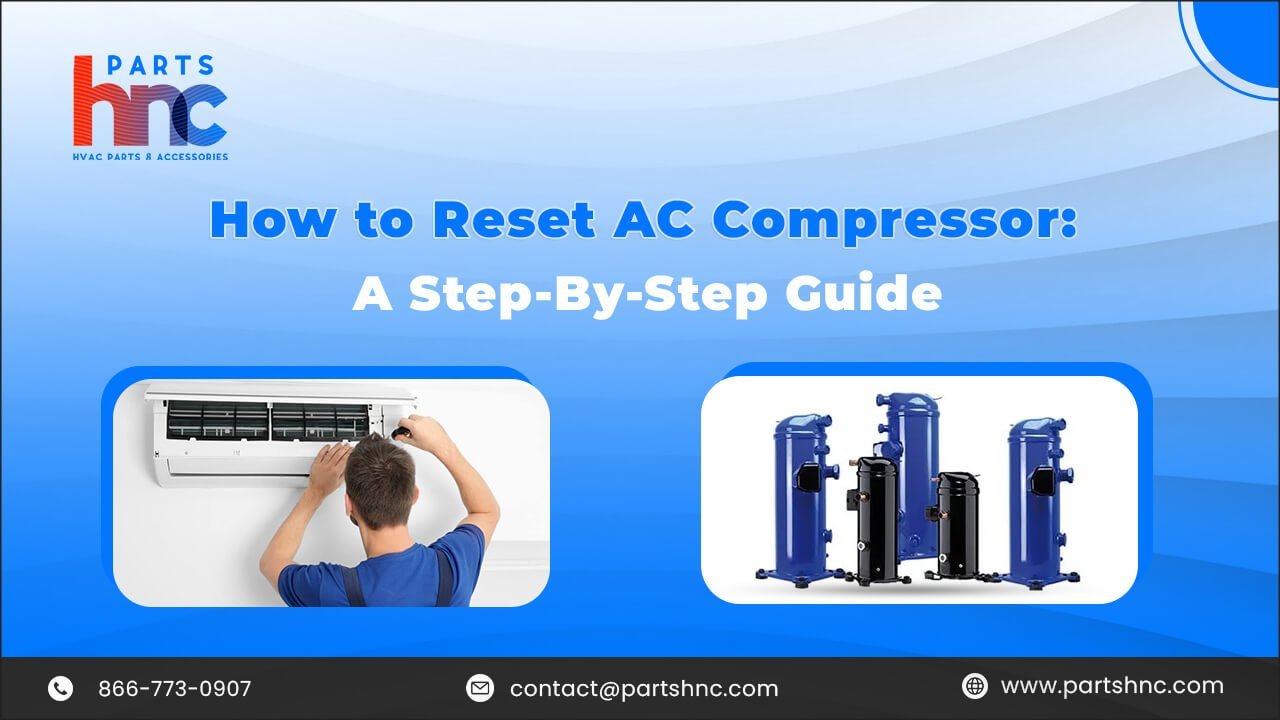
Resetting an AC compressor requires turning off the thermostat, flipping the circuit breaker switch to OFF for 30 minutes, and switching it back ON to clear internal safety locks. This simple procedure suits homeowners whose cooling shut down after a brief electrical brownout or a summer storm surge.
Tools You Need to Reset the Compressor
- A basic digital or manual thermostat installed on the wall inside your home.
- The main household electrical service panel, usually located in a basement, garage, or utility closet.
- A standard household flashlight if your breaker panel sits in a dark hallway or closet.
- Access to the outdoor condensing unit’s exterior shut-off box (usually mounted on your outside wall).
If your compressor won’t start due to burnt wiring or a dead starting capacitor, that work needs a licensed HVAC technician because high-voltage parts retain lethal electrical charges even when disconnected.
Step-by-Step
- Move the mode switch on your indoor thermostat to the OFF position, ensuring the target temperature setting isn’t actively calling for cold air.
- Walk to your home’s main electrical breaker box and open the protective steel metal door.
- Locate the double-pole circuit breaker labeled “AC,” “Air Conditioner,” or “Heat Pump,” which typically controls 240-volt power.
- Flip the breaker switch firmly to the full OFF position; if the switch sits stuck in the middle trip position, push it hard OFF first.
- Wait exactly 30 minutes with the breaker off so the internal protective circuitry resets and the system equalizes pressure. Careful: Don’t turn the switch right back on immediately, as short-cycling a hot compressor against trapped internal refrigerant pressure can destroy the pump motor.
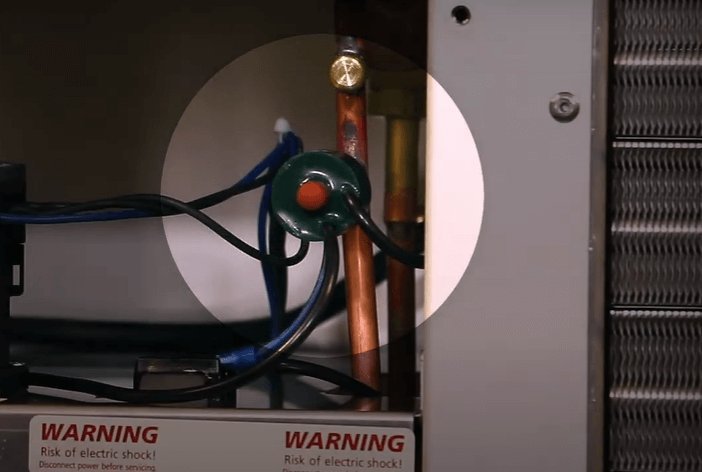
- Inspect the outdoor condensing unit’s exterior cabinet to see if your model includes an external red rubber reset button near the base of the access panel. Tip: This varies by model — check the label on your unit’s access panel to see if a manual reset button exists, as many modern scroll compressors don’t feature one.
- Press the red button firmly once if present, then return inside and flip the main electrical breaker switch back to ON.
- Switch your thermostat back to COOL and set the dial 5 degrees below the current room temperature to start the cycle.
Opening the cabinet housing to touch the compressor terminals, discharge capacitors, or test electrical contactors requires a licensed HVAC technician; a homeowner must never dismantle the outdoor metal panels.
Resetting by Equipment Type
Different systems handle electrical lockouts with varied restart procedures, cooldown periods, and monitoring steps.
| System Type | Typical Wait Time | Primary Reset Method | What to Watch During Restart |
|---|---|---|---|
| Central Split Unit | 30 minutes | Main 240V breaker panel switch | Outdoor fan spinning freely without hums |
| Window AC Unit | 5 to 10 minutes | Plug-mounted LCDI test/reset buttons | Steady airflow without blinking LED lights |
| Ductless Mini-Split | 15 minutes | Wall isolator switch or subpanel | Louver movement and error codes on display |
| Package Heat Pump | 30 to 45 minutes | Service disconnect pull-out block | Reversing valve click and smooth motor start |
It’s safer to leave power off longer to let heat dissipate than to restart too quickly and risk damaging internal electrical coils.
How to Tell You Did It Right
A successful restart produces quiet humming from the outdoor cabinet, warm air blowing straight up from the top exhaust fan, and cool air venting from your indoor registers within five minutes. A poor result features a loud clicking noise every few seconds, a frozen copper suction line, or an electrical breaker that instantly snaps back into the tripped position. This lockup happens because the compressor’s thermal overload protector cuts power whenever internal motor windings run too hot. To prevent this, replace dirty 1-inch pleated air filters regularly and keep outdoor condenser coils clear of grass clippings and leaves.
Operating Standards and Cleanup
The ENERGY STAR heating and cooling guidelines outline that proper airflow maintenance and regular coil cleaning prevent most severe motor overloads. Once your cooling resumes, close your breaker box door tightly, screw the outdoor disconnect cover shut, and record the trip date in your maintenance notebook. A standard reset lasts indefinitely if a storm caused the initial surge; if the unit trips weekly, the breaker is protecting your house from an active mechanical failure. If the breaker trips instantly upon starting, shut the thermostat off completely and contact a licensed cooling specialist to test your electrical components safely.
Alternative Reset Methods
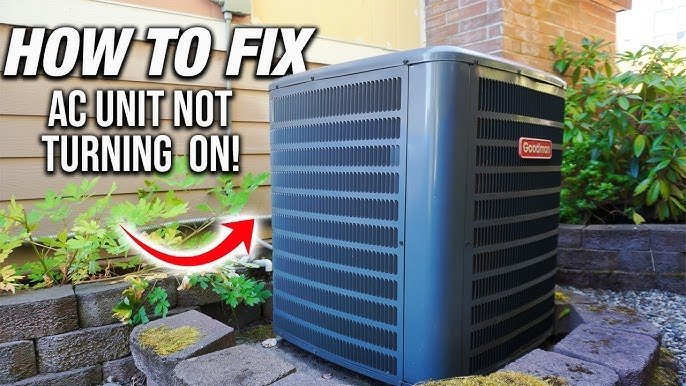
Outdoor Disconnect Handle Pull
Open the metal electrical disconnect box mounted next to your outdoor unit, pull the insulated breaker block downward, and wait 30 minutes. This cuts power directly at the compressor without shutting off interior furnace blower components.
Thermostat Battery Removal
Pop the thermostat faceplate off the wall, remove the AA batteries for 10 minutes, and reinsert them. This resets corrupted electronic control logic when your digital thermostat freezes without cycling the high-voltage breaker.
Dedicated Low-Voltage Fuse Replacement
Swapping a blown fuse restores 24-volt signaling to your outdoor compressor contactor when household breakers haven’t tripped.
Frequently Asked Questions
Can a Dirty Air Filter Cause an Ac Compressor to Trip?
Yes, a clogged filter suffocates system airflow, causing indoor evaporator coils to freeze up. This drop in pressure forces the outdoor pump to work hotter and harder until its thermal safety switch cuts high-voltage power to prevent permanent motor burnout.
Why Is My Outdoor Unit Humming Without the Fan Spinning?
A humming outdoor cabinet usually signals a failed motor capacitor or a mechanically seized fan motor. The compressor may try to start, but without a functioning capacitor to deliver initial starting torque, it overheats quickly and trips the electrical safety breaker.
How Long Does a Compressor Need to Cool Down Before Restarting?
A severely overheated compressor takes between two and three hours for its internal thermal switch to cool down and close. If your system shut down on thermal overload during extreme outdoor heat, the breaker reset won’t activate cooling until internal temperatures drop safely.
Is It Safe to Reset the Circuit Breaker Multiple Times?
No, flipping a tripped air conditioner breaker more than twice in one afternoon creates severe electrical fire hazards. If the switch trips instantly, a direct short circuit or grounded motor winding exists, which requires immediate diagnosis by a certified electrical technician.
What Happens If I Forget to Turn Off the Thermostat Before Resetting?
Leaving the thermostat on cold sends immediate voltage to your system before internal pressures balance across the expansion valve. This creates high starting amperage, placing heavy mechanical strain on electrical wiring and tripping your breaker immediately.
Why Does Cold Air Stop Blowing After a Power Outage?
Power restoration often sends brief voltage surges that trigger modern compressor safety lockout relays. Shutting off your thermostat and main equipment breaker for 30 minutes clears this protective logic hold, allowing the system to resume normal cooling cycles.
Give your home a little time to cool down. If the air coming from your vents still feels warm, it’s best to call a licensed technician. You don’t want to force the system to run if there’s a deeper mechanical fault hiding inside the outdoor unit.