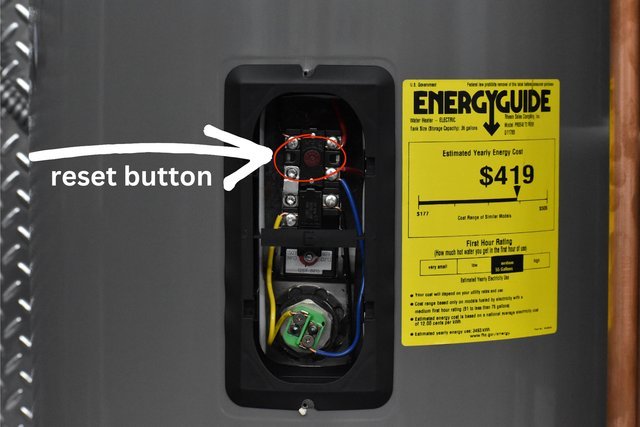
To reset an electric water heater, press the red button behind the upper access panel until it clicks, which takes about two minutes after turning off the breaker. This quick fix works best for standard tank models when water suddenly goes cold after a heavy demand spike or a brief power surge.
Tools You Need to Reset the Heater
- A flat-head or Phillips screwdriver (size #2 fits most panel screws; power drills will strip them).
- A non-contact voltage tester (or have an electrician verify power is dead).
- A standard flashlight or headlamp (phone lights drop easily into cramped heater closets).
- Work gloves (thin leather or rubber-coated, to guard against sharp metal tank edges).
A manual screwdriver works best here; an impact driver does not, because it easily cracks the plastic thermostat housing. If your tank shows standing water or burned wires, you’ll need a licensed electrician or plumber to inspect the wiring and internal parts safely.
Step-by-Step
- Switch off the dedicated double-pole breaker marked for the water heater inside your main electrical panel.
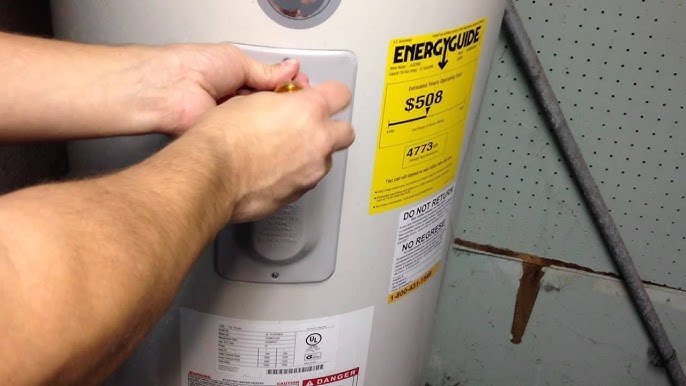
- Unscrew the two screws holding the upper metal access panel to the side of the tank and set the panel aside.
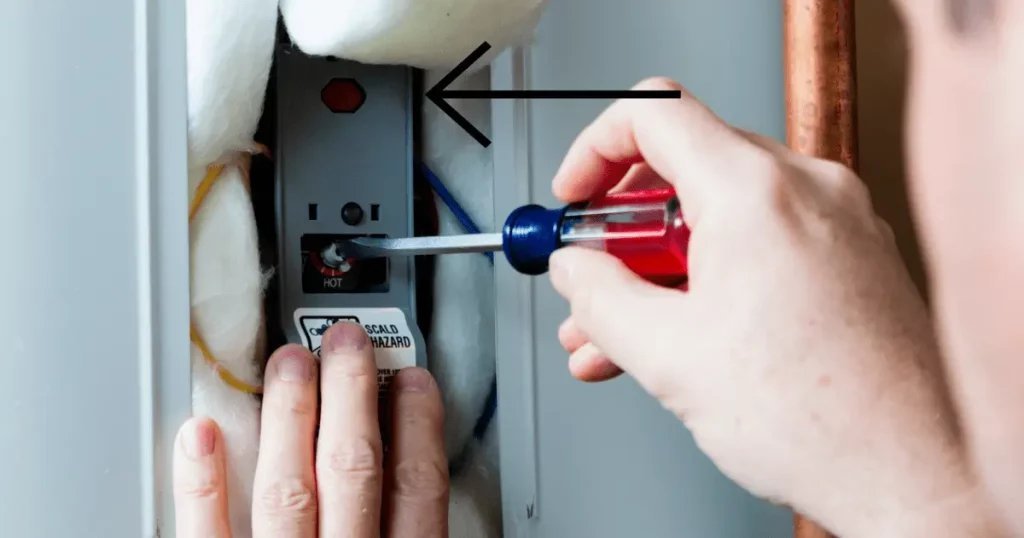
- Fold back the fiberglass insulation blanket gently to uncover the high-limit switch housing.
- Check again with your voltage tester directly near the plastic guard to ensure zero current flows to the terminals. Careful: High voltage lines live behind this panel; touching bare terminals with power on can cause fatal electrical shocks.
- Press the red high-limit reset button firmly with your thumb until you feel and hear a distinct click. Tip: If you feel no movement or click, the switch hasn’t tripped, or the water temperature inside is still above the shutoff limit.
- Fold the insulation smoothly back over the thermostat, making sure it doesn’t bunch against the outer edges.
- Align the metal access cover over the opening and tighten both screws snugly by hand.
- Flip the double-pole circuit breaker back to the on position at the main service panel.
Mains-powered equipment holds real danger: opening internal component housings, checking heating elements with multimeters, or swapping thermostats requires a licensed tradesperson.
Matching the Reset to Tank Conditions
Resetting the switch takes minimal effort, but tank conditions change what happens next.
| Tank Condition | Time Required | Action Difference | What to Monitor |
|---|---|---|---|
| Standard single-element tank | 5 minutes | Only one access cover exists | Water warmth after 45 minutes |
| Dual-element high-capacity tank | 5 minutes | Reset button sits behind upper panel only | Top and bottom element heating cycle |
| Hard water scale buildup | 10 to 15 minutes | Button clicks but trips again quickly | Popping sounds from base of tank |
| Overheated water supply | 45 to 60 minutes | Must wait for water to cool before button resets | Temperature setting on dial |
If you’re dealing with very hot water, it’s safer to let the water sit and cool down before trying to reset the button rather than forcing it immediately. This varies by model — check the label on your tank for factory instructions.
How to Tell You Did It Right
A good result brings warm water back to your faucets within roughly an hour, without funny noises or burning odors. A poor result leaves the water cold, or makes the breaker trip the second you flip it on.
The most common quality failure happens when the button pops right back out. This switch cuts power because water temperatures hit unsafe levels, often caused by a shorted heating element or a stuck thermostat. Mineral scale coating the lower element also traps heat, which trips the sensor prematurely. Lowering your thermostat dials slightly and flushing sediment once a year keeps the high-limit switch from shutting down.
Trade-offs come with quick resets: hitting the button gets hot water tonight, but ignoring why it tripped risks damaging the upper thermostat assembly soon.
Safety Limits and Final Steps
The Consumer Product Safety Commission water heater safety guidance recommends setting residential thermostats to 120 degrees Fahrenheit to prevent scalding burns.
Put your tools away, clear any dropped insulation fibers from the floor, and screw the outer panel tightly so children can’t reach the live wiring. A normal reset lasts for years unless an underlying part fails. If your breaker trips instantly or sparks fly when power returns, stop immediately; that job needs a licensed electrician.
This fix isn’t for homeowners who notice water pooling beneath the jacket, as rusted tanks can’t be reset back to health. If the reset button feels loose or mushy without a click, do A: call a technician to replace the high-limit switch; if the button clicks firmly and stays down, do B: restore power and test the tap after an hour. A frequent mistake is cranking the temperature dial up to maximum, which costs homeowners money in burned-out heating elements and high electric bills.
Other Ways to Restore Heating
Resetting the Breaker Panel
Switch the double-pole breaker completely to off, then back to on. This handles nuisance electrical surges from the utility grid without using tools on the tank, taking less than two minutes.
Lowering the Thermostat Setting
Turn both thermostat dials down to 120 degrees with a flat-head screwdriver. This stops the high-limit switch from tripping during hot afternoons, though it slightly limits your continuous shower run-time.
Hiring a Professional Plumber
Bring in a licensed plumber to drain the tank and test internal resistance. This costs more money than a DIY check, but it guarantees proper diagnosis of corroded elements and failed wiring.
Frequently Asked Questions
Can You Reset a Water Heater Without Turning Off the Breaker?
No, you shouldn’t ever do this. Removing the outer cover exposes 240-volt electrical connections. A single slip with a finger or screwdriver can cause severe shock or death. Always switch off power at the main electrical panel first.
Why Does My Water Heater Reset Button Keep Tripping?
A shorted heating element usually causes this problem. When the element’s metal sheath cracks, electric current overheats the surrounding water uncontrolled. The high-limit safety switch trips automatically to protect the tank from boiling over and building extreme pressure.
How Long Does an Electric Water Heater Take to Heat Up After a Reset?
Most standard tanks need between 45 and 90 minutes to heat fully. Dual-element models heat the top third of the tank first so you get usable warm water within roughly 30 minutes, while smaller compact tanks warm up faster.
Is It Safe to Press the Red Reset Button More Than Once?
Yes, pressing it a second time is safe if the first click didn’t hold. However, if the switch trips repeatedly within a few days, stop pressing it. Repeated tripping signals an electrical defect that creates fire and burn hazards.
What Happens If the Red Button Doesn’t Click?
The button won’t click if the water inside the tank is still boiling hot. You’ll need to wait for the tank to cool down. If the water is completely cold and the button never clicks, the switch mechanism is broken.