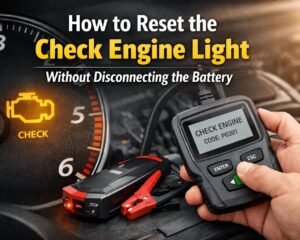
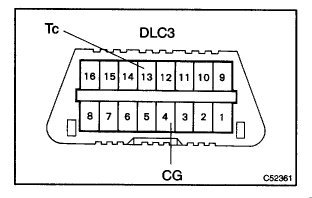
Bridging terminals 4 and 13 on a 16-pin OBD2 port with a jumper wire clears the trouble code in about 3 minutes without expensive scan tools. Resetting the ABS sensor with a paper clip works best for older vehicle owners who repaired a wheel speed fault and need to turn off the dash light manually.
What You’ll Need
- One standard metal paper clip, unpainted and bent into a U-shape.
- A vehicle repair manual showing your exact pin layout; check your vehicle’s factory manual or a trusted publisher like Haynes.
- A working flashlight to see inside the dark diagnostic port.
- Clean dry cloth to wipe grease off the connector pins.
- Safety glasses to protect your eyes when working under the dashboard.
A thin copper electrical wire works as a substitute jumper, but a plastic-coated paper clip won’t work because the coating blocks electricity.
Step-by-Step
- Park your vehicle on flat ground, shift into park, and set the emergency parking brake firmly.
- Turn the ignition switch to the complete “OFF” position and pull the key out of the lock cylinder.
- Locate the 16-pin OBD2 diagnostic port, which usually sits beneath the driver-side dashboard near your left knee.
- Straighten your metal paper clip, then bend it into a tight U-shape with ends spaced about 0.5 inches apart.
- Push one end of the paper clip firmly into pin 4 (chassis ground) and the other end into pin 13 (diagnostic signal). * Careful: Pin numbers count across the connector; bridging the wrong terminal can short out your 12-volt power feed and blow an expensive main fuse.
- Insert your car key and turn the ignition switch to the “ON” position without cranking or starting the engine.
- Pump the brake pedal rapidly at least 8 times within a 3-second window as soon as the dash lights turn on. * Tip: The ABS light will flash rapidly in a steady pattern once the internal computer accepts the memory clear.
- Turn the ignition back to “OFF”, wait 5 seconds, and pull the paper clip out of the diagnostic port.
- Start the engine normally to verify the warning symbol stays off during idle. * If the light stays on after two tries, an active wiring fault remains; stop working and take the car to an ASE-certified technician for diagnosis.
Reset Methods by Vehicle Scenario
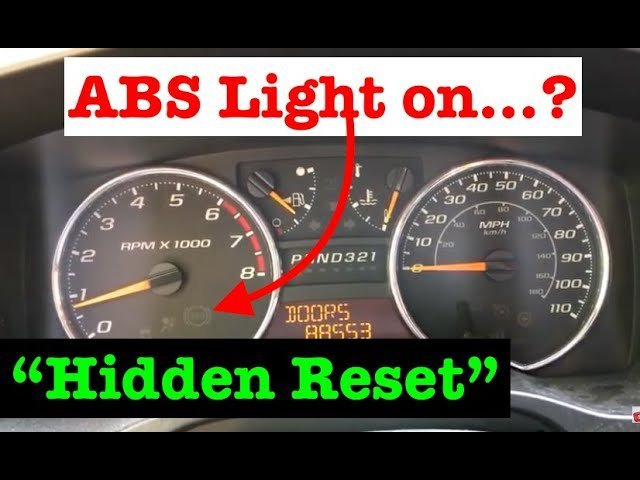
This diagnostic trick depends heavily on your vehicle’s age, computer system, and pin configuration.
| Vehicle Situation | Time or Cost Required | What Is Different | What to Watch For |
|---|---|---|---|
| Pre-2005 Japanese models | 3 minutes, free | Factory software permits pin 4 to 13 clearing | Steady, rapid flashing of the ABS cluster light |
| Modern CAN bus vehicles | Scan tool purchase | Paper clips don’t trigger internal resets | Damaged pins or a fried body control module |
| Active broken wheel sensor | 5 minutes, free | The computer detects an open circuit immediately | ABS light turns off briefly, then stays solid |
| Unrepaired tone ring crack | 10 minutes, free | Light clears at rest but returns once wheels roll | Warning light returns above 15 miles per hour |
It’s safer to start with a simple diagnostic read rather than jumping pins blindly, because overshooting into a powered terminal damages your computer.
How to Tell You Did It Right
A good result shows a dark instrument cluster where the ABS light illuminates for a two-second bulb check at engine start, then shuts off completely. A poor result leaves the light glowing solid amber or blinking a repeating fault sequence. The light often reappears immediately if you cleared the memory without fixing the underlying physical damage at the wheel hub. Corroded sensor plugs, severed harness wires, or cracked tone rings trigger fresh error codes the second the computer runs its self-test. You can prevent recurring warnings by cleaning iron debris off the magnetic sensor tip, seating the harness connector tightly until it clicks, and confirming the air gap matches factory clearance.
Brake Safety Standards and Sensor Verification
Federal regulations mandate anti-lock braking systems on all light passenger vehicles under NHTSA Federal Motor Vehicle Safety Standard 126, which requires visual warning lamps to alert drivers whenever a malfunction occurs. Once the warning lamp turns off, verify your repair by driving the vehicle on dry pavement above 20 miles per hour. Remove your tools, store your repair records, and reinstall any plastic trim panels you detached near the steering column. If you fixed the broken wire or dirty hub properly, this manual reset lasts permanently until a new mechanical issue develops. However, if wheel shudder or pulling occurs, pull over safely; brake hydraulic repairs require professional shop equipment to prevent catastrophic failure.
Alternative Reset Options
Handheld Obd2 Scan Tool
A basic handheld scanner with dedicated ABS capability plugs into the port and clears error codes in 30 seconds. It costs more money upfront than a wire jumper, but it removes the risk of shorting delicate data pins.
Battery Terminal Disconnect
Disconnecting the negative 12-volt battery cable for 15 minutes drains remaining circuit voltage on select older cars. This method takes longer, resets your clock and radio presets, and rarely works on modern vehicles with non-volatile memory.
Self-Clearing Drive Cycle
Some vehicle computers automatically turn the light off after you repair the damaged sensor. Driving the car through 3 complete drive cycles above 25 miles per hour allows the computer to verify wheel speed signals naturally.
Frequently Asked Questions
Can a Paper Clip Damage My Car’s Computer?
Yes, jumping the wrong pins will damage your computer. If you accidentally bridge the 12-volt battery power terminal directly to ground, you’ll melt the connector pin or blow the vehicle’s electronic control unit fuse. Always confirm your port’s pin numbers using a wiring diagram before touching the socket.
Why Won’t My Abs Light Turn Off After Jumping the Pins?
Your vehicle still has an active hardware failure. The computer runs an automatic electrical check each time you turn the key. If an internal sensor coil is broken or a harness wire is severed, the system detects the open circuit instantly and turns the warning lamp back on.
Is It Safe to Drive with the Abs Light On?
Yes, you can safely drive for short trips because standard hydraulic brakes continue to work normally. However, you won’t have anti-lock assistance during panic stops or on wet, slippery roads. This trade-off means your tires can lock up easily, lengthening your stopping distance during sudden highway stops.
Does This Trick Clear Engine Check Lights Too?
No, bridging pins 4 and 13 targets chassis and brake computer codes on supported older models. Engine trouble codes reside in the powertrain control module and follow different communication lines. You must use an emissions-compliant code reader or an OBD2 scanner to clear check engine faults properly.
What Happens If I Pump the Brake Pedal Too Slowly?
The computer ignores the reset command and leaves the stored code in memory. The control module requires eight distinct pedal switches within three seconds to confirm an intentional reset. If your foot slips or you pump too slowly, switch the key off and repeat the timing sequence again.