Resetting a check engine light after an oil change takes about 5 minutes using a basic OBD2 scanner set to clear diagnostic trouble codes. You plug the unit in, switch the ignition on, and wipe the stored fault. This fix suits drivers whose warning lamp stays on after routine fluid service.
Tools to Reset Your Check Engine Light

- An OBD2 handheld code scanner with a 16-pin connector (a basic unit works; an old OBD1 tool won’t plug in).
- Your vehicle’s key or push-start fob.
- A clean shop rag or paper towel to verify fluid level.
- Your car owner manual to confirm fuse positions and port location.
- A 10 mm wrench (only needed if your scanner port loses power and requires a battery reset).
A wireless phone-linked OBD2 adapter works just as well as a corded reader, but a random paperclip jumped across port terminals doesn’t work and can short your car’s wiring. If a port fuse is blown, an auto technician can trace the short safely.
Step-by-Step
- Park on flat ground, shift to Park (or Neutral for manual), set the parking brake, and shut the engine off.
- Locate the 16-pin diagnostic port under the driver side dashboard, usually 2 to 12 inches below the steering column.
- Plug the scanner cable straight into the port until it clicks firmly into place.
- Turn the ignition switch to the ON position (two key clicks or two fob presses without touching the brake) while keeping the engine off.
- Read the active trouble codes on the scanner screen, write down the 5-digit codes (like P0171 or P0420), and review what caused the light. Careful: If you clear codes before writing them down, a mechanic can’t trace an underlying problem later.
- Select the “Erase” or “Clear Codes” option on your scanner’s main menu, then press “Yes” or “Enter” to confirm. Tip: Keep the key completely still during clearing; turning the ignition off mid-erase can cause communication errors.
- Wait 10 to 15 seconds until the scanner screen shows a confirmation message such as “Erase Done” or “Pass.”
- Turn the ignition off, pull the scanner plug out smoothly, and start the engine to check the gauge cluster.
If the warning light flashes rapidly after starting, turn the engine off immediately and call an ASE-certified mechanic, as a flashing light indicates active engine misfire.
Reset Methods Across Different Vehicle Situations
Reset times and requirements shift depending on the equipment you own and what your car’s diagnostic computer detects.
| Vehicle situation | Time and expense | What changes | What to watch |
|---|---|---|---|
| Handheld OBD2 tool | Under 5 minutes; scanner purchase | Clears stored fault memory directly | Confirmation screen on tool |
| Auto parts store scan | 10 to 15 minutes; free service | Counter staff reads faults for you | Dashboard lamp goes dark |
| Disconnecting car battery | 20 minutes; free with hand tools | Wipes clock, radio presets, and idle trim | Rough idle during restart |
| Unresolved mechanical fault | Ongoing; parts repair cost | Lamp returns within 10 to 50 miles | Code re-trigger on scanner |
It’s safer to start small and add more diagnostic effort than to overshoot on the first try by replacing good sensors before reading the code.
How to Tell You Did It Right
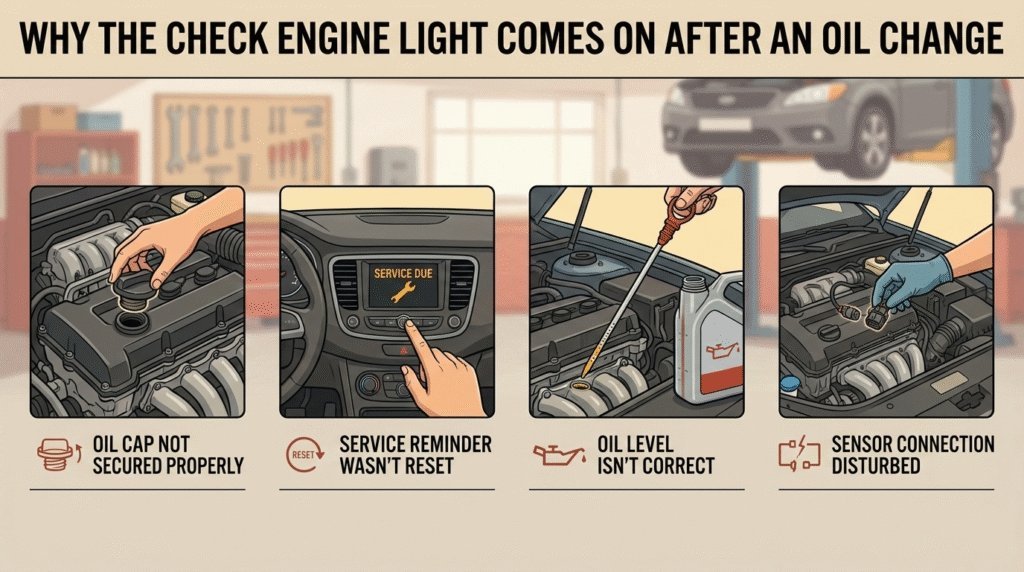
A good result shows all dashboard warning lights turn on for a 2-second bulb check, after which the check engine lamp shuts off while the engine idles. A poor result leaves the amber engine icon glowing continuously, or causes it to pop back on after a short block drive. The most frequent quality problem with this reset is code return. This happens because clearing the memory erases the alert but leaves the broken part or loose oil cap untouched.
You can prevent quick recurrences by tightening the oil fill cap until it clicks, checking your dipstick to confirm the crankcase isn’t underfilled or overfilled, and making sure the oil filter housing doesn’t leak fresh oil onto nearby oxygen sensors.
Diagnostic Standards and Post-Service Steps
Vehicle emissions rules follow standards enforced by the EPA vehicle emissions regulations, which require your vehicle’s engine control module to complete several internal monitor tests before passing an official state inspection.
After using your scanner, unplug the tool, store it in your glove box, and re-enter your radio stations or clock settings if you disconnected the battery terminal. This software reset lasts permanently if no mechanical damage exists, or until a new physical fault occurs. If your vehicle fails to set internal readiness monitors after 100 miles of driving, a licensed state emissions technician should inspect your catalytic converter and vapor lines.
Alternative Reset Methods

Free Retail Parts Counter Reset
Drive to a retail auto parts store and request a free diagnostic scan at the counter. The clerk plugs a commercial handheld scanner into your car and reads the trouble codes out loud within 5 minutes without you buying tools.
Battery Ground Cable Cycle
Loosen the negative battery cable nut with a 10 mm wrench, lift the terminal off the post, and wait 15 minutes before reconnecting it tightly. This wipes computer memory without tools, but it resets your clock and car radio presets completely.
Built-in Dash Button Sequence
Some older cars allow a manual reset using trip-meter buttons and ignition key turns. This varies by model — check the label or user guide for your car’s exact button pattern. It costs nothing, though it works on service lamps rather than emission fault codes.
Frequently Asked Questions
Will Changing Engine Oil Reset the Check Engine Light Automatically?
No. An engine computer retains trouble codes in permanent memory until an OBD2 tool clears them or the computer passes three complete drive cycles without seeing the fault. Changing your engine oil alone doesn’t trigger an immediate reset.
Is a Maintenance Light the Same as a Check Engine Light?
No. A maintenance light (or “oil life” message) is a routine timer based on mileage. A check engine light signals an engine sensor, ignition, or emissions fault. A basic oil reset button won’t clear an engine fault.
Can a Loose Oil Cap Cause a Check Engine Light?
Yes. A loose, cracked, or missing engine oil cap lets unmetered air escape from the positive crankcase ventilation system. This vacuum leak throws an engine code that keeps the warning light lit until tightened.
How Long Does a Car Take to Clear the Light After an Oil Change?
It takes between 50 and 100 miles of mixed highway and city driving for your car’s computer to complete its internal tests. If the issue is fixed, the light goes out by itself once monitors finish running.
Can an Overfilled Oil Crankcase Trigger the Warning Light?
Yes. Adding too much oil causes the crankshaft to whip fluid into foam, dropping oil pressure and sending oil mist into the intake air tract. This fouls plugs and mass airflow sensors, triggering the check engine light.